





A tune-up is a type of maintenance that improves your Chevy’s performance and protects it against potential problems. As your Chevy dealership, we want to tell you about some of the reasons why you should get one before winter arrives.
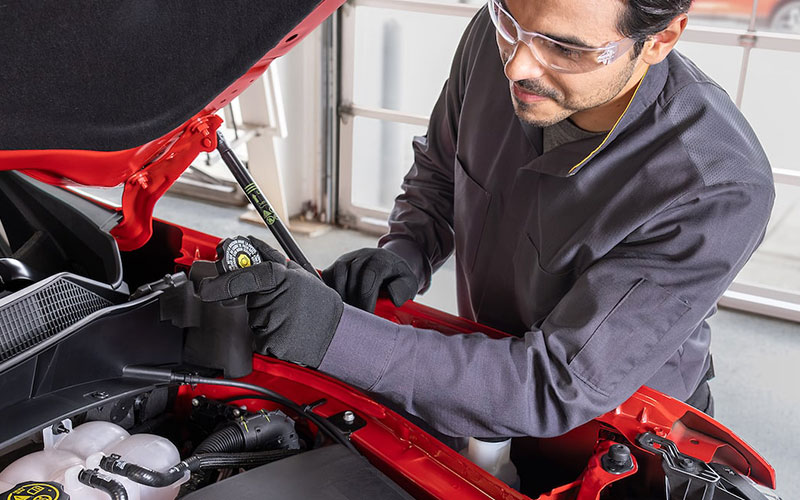
3 Reasons You Should Get a Tune-Up at Your Chevy Dealership Before Winter
Prevent a Dead Battery
Low temperatures greatly reduce battery performance. Below 0°F, a battery can lose 30 to 35% of its capacity, and if your battery is more than three years old, it can weaken even further. Your engine also takes longer to start in winter, and this extra effort can cause a relatively new battery to weaken, or an older battery to fail.
Our technicians will test your battery using our computerized battery tester. This device subjects the battery to the same demands needed to start the engine. A healthy battery has a voltage of 12.6V, and during the test, it should show a voltage of at least 9.6V. If the tester reading shows less than this, your battery is failing. We’ll replace your old battery to prevent you from being stranded on the road waiting for a tow or jump-start.
Protect Your Engine
It may be cold outside, but combustion and the movement of countless parts continue to generate large amounts of heat inside the engine. This heat can damage sensitive engine components like gaskets and seals, so it must be removed ASAP. Coolant is a mixture of antifreeze and water, and it’s able to absorb heat and transport it to the radiator for removal through heat exchange.
As coolant ages, it becomes less efficient at removing heat. This causes the engine temperature to rise and can result in major damage even during winter. Older coolant can also become corrosive and damage the radiator, water pump, and other components. We’ll test the coolant and replace it if necessary to ensure your engine continues to work efficiently.
Maintain Good Traction
Deep tread is vital for safe driving as it allows the tires to grip the road surface securely. This is even more important during winter, as snow and ice make it challenging for tires to get good traction, and your Chevy could skid. We’ll examine your tires and recommend replacing any that have worn or damaged tread.
For extra safety, it’s advisable to replace your all-season tires with snow tires. All-season tires can become inflexible at low temperatures, which also reduces traction. Snow tires, on the other hand, are made from softer rubber, so they can’t become inflexible at low temperatures.
If you’d like to know more about preparing your Chevy for winter or schedule a service, contact us today at Mangino Chevrolet in Amsterdam, NY.
Connect with us


- June 2026
- May 2026
- April 2026
- March 2026
- February 2026
- January 2026
- December 2025
- November 2025
- October 2025
- September 2025
- August 2025
- June 2025
- May 2025
- April 2025
- March 2025
- February 2025
- January 2025
- October 2021
- September 2021
- August 2021
- July 2021
- June 2021
- April 2021
- March 2021
- February 2021
- January 2021
- December 2020
- November 2020
- October 2020
- September 2020
- August 2020
- July 2020
- June 2020
- May 2020
- April 2020
- March 2020
- February 2020
- January 2020
- December 2019
- November 2019
- October 2019
- June 2019
Archives
- 2025 Chevrolet Blazer
- 2025 Chevrolet SUVs
- 2025 Chevy Blazer EV
- 2025 Chevy Colorado
- 2025 Chevy Equinox
- 2025 Chevy Lineup
- 2025 Chevy Malibu
- 2025 Chevy models
- 2025 Chevy Sedans
- 2025 Chevy Silverado 1500
- 2025 Chevy Silverado 2500
- 2025 Chevy Silverado EV
- 2025 Chevy Trax
- 2025 Models
- 2026 Chevy Equinox
- 2026 Chevy Silverado 1500
- 2026 chevy trucks
- 2026 Silverado 1500
- Ballston Spa Chevrolet Dealer
- Blazer EVinventory
- Chevrolet service
- chevrolet service center
- Chevrolet Suburban
- Chevrolet Tahoe
- Chevrolet Traverse
- Chevrolet vehicles in Amsterdam
- Chevy
- Chevy EVs
- Chevy Leasing
- Chevy Silverado
- Chevy SUVs
- Chevy Traverse
- Chevy Trucks
- Mangino Chevrolet
- Mangino Chevrolet Service
- oil change
- Silverado 3500
- summer service tips
- Uncategorized